
ELMA in Action: Real-World Solutions Driving Legal Ops Impact
May 06, 2026

contracts legal operations artificial intelligence future of law
If you spend time with legal teams, as we do at Elevate, a pattern becomes very clear. The pressure rarely comes from the complexity of the legal work itself. It comes from everything around it: chasing information, managing requests, updating systems, coordinating stakeholders, and keeping processes moving. That surrounding work is what consumes time. It’s also where many AI conversations tend to fall short.
I have explored how AI is starting to shape legal departments across contracts, spend, and workflow management, and where its limitations still lie. The consistent theme has been that insight on its own doesn’t materially change how legal teams operate day to day. What makes a difference is whether that insight leads to action.
Over the past few months, we’ve been focused on that exact point: using ELMA not just to support legal work, but to take on parts of the workstream that typically sit outside of the core legal task, though are still essential to getting it done.
All of the examples below show how automation and AI can remove work from the critical path for legal teams, freeing up time for higher-value work.
Enabling System Connectivity
A persistent issue in legal ops is the amount of time spent moving data between systems that weren’t designed to work together.
ELMA can now act as an intelligent ‘API bridge’, connecting two platforms and handle data synchronisation automatically. When a record is created or updated in one system, the change is picked up, validated, and pushed to the other within minutes. What previously took around 20 minutes of manual effort now takes less than five, with fewer errors and no re-entering of data.
The same principle applies to contract and record management. Bulk updates, particularly where relationships between records need to be established, can now be handled through structured automation rather than manual intervention. This makes large-scale updates viable, reducing inconsistency and ensuring data integrity between systems.

Improving Intake Before Work Even Starts
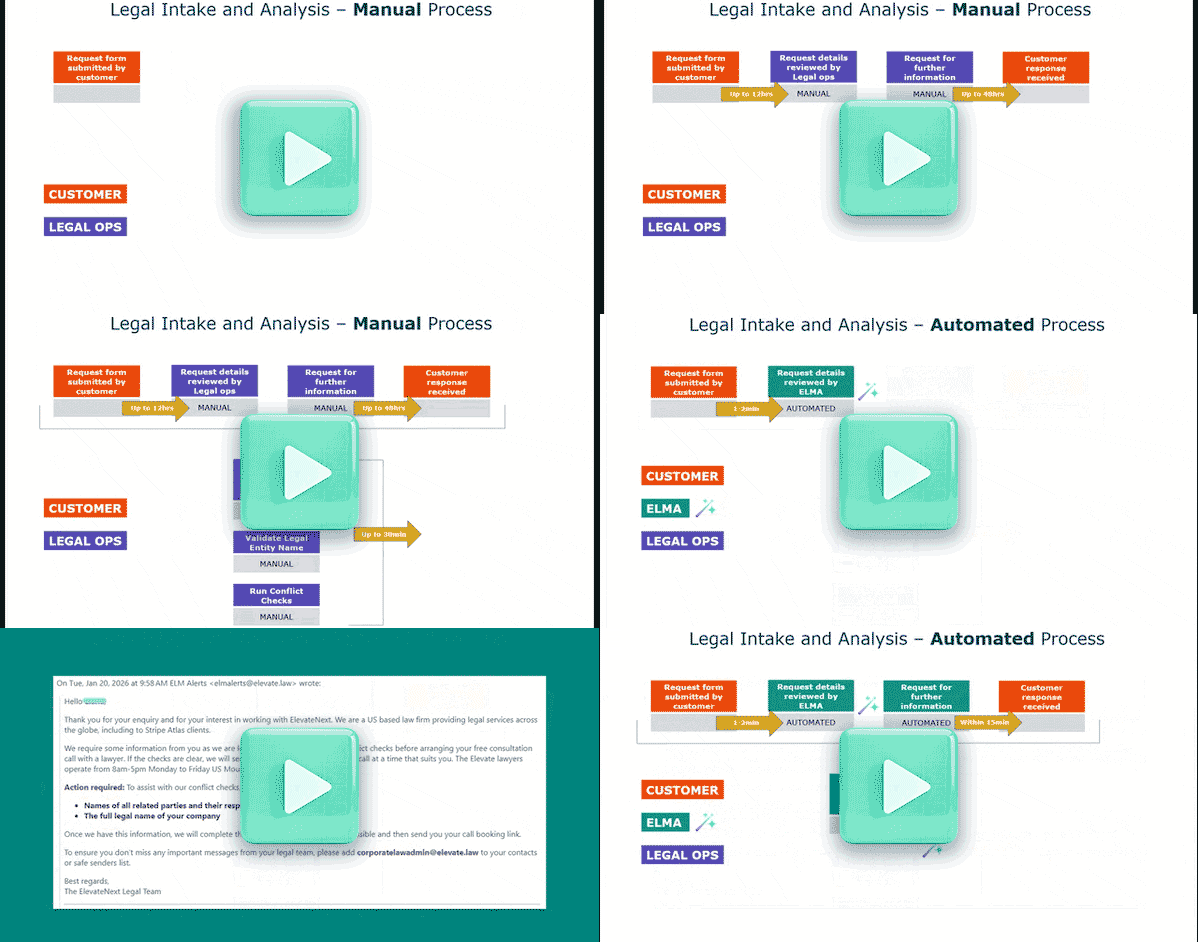
Delays can typically start at the very outset of a new legal request or matter. Requests arrive incomplete with key information missing, and teams lose time chasing details before any legal work can start.
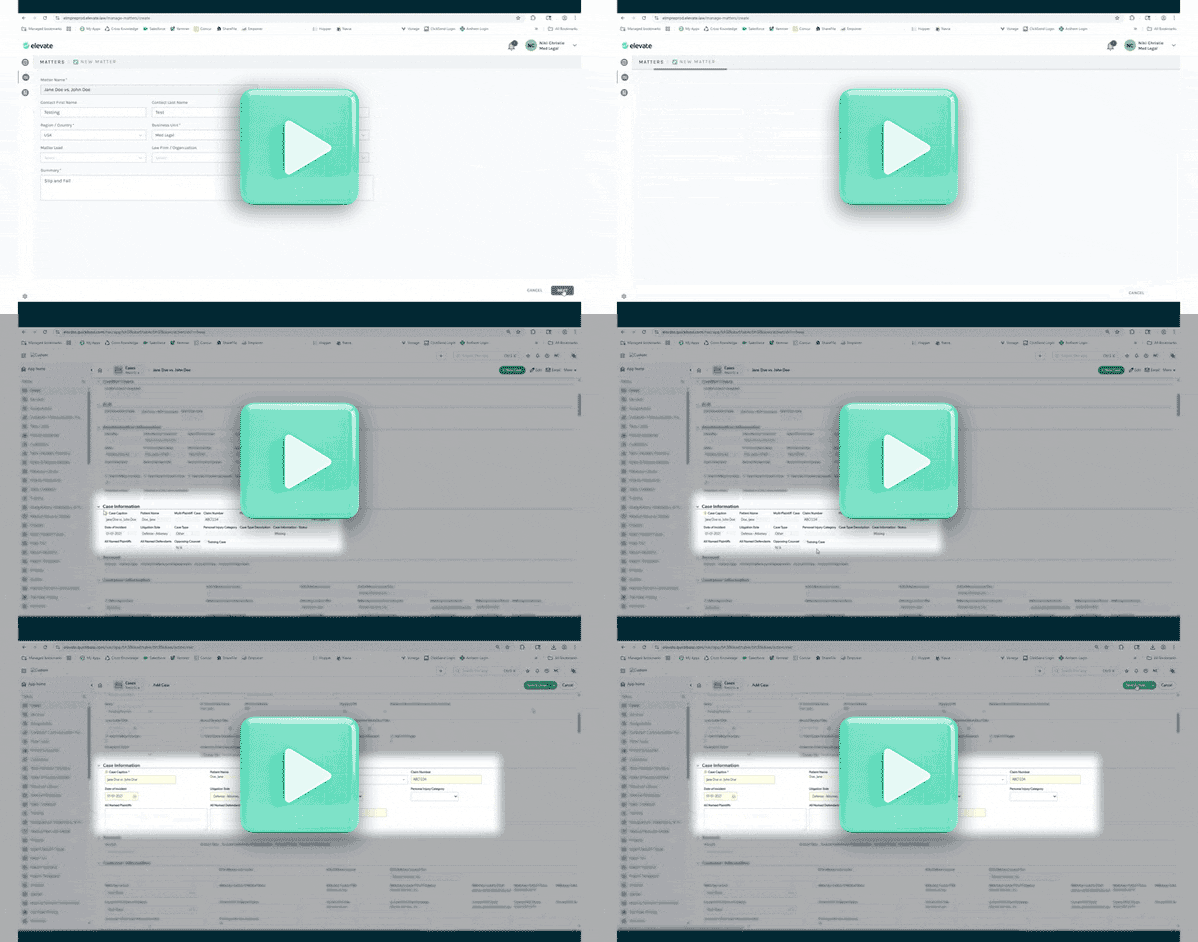
ELMA can now handle the entire process. It reviews initial submissions, identifies missing data, following up with the requestor via email, and verifies details using trusted web sources through browser automation. Key information can also be extracted from attachments using AI, and conflict checks are run by cross-referencing the information with existing company records.
By the time a request reaches the legal team, it already has all the necessary information included and any checks on that data have already been completed, with a clear summary of what needs attention. Via integration with a system of record, new requests and matters can even be created automatically using the verified information.
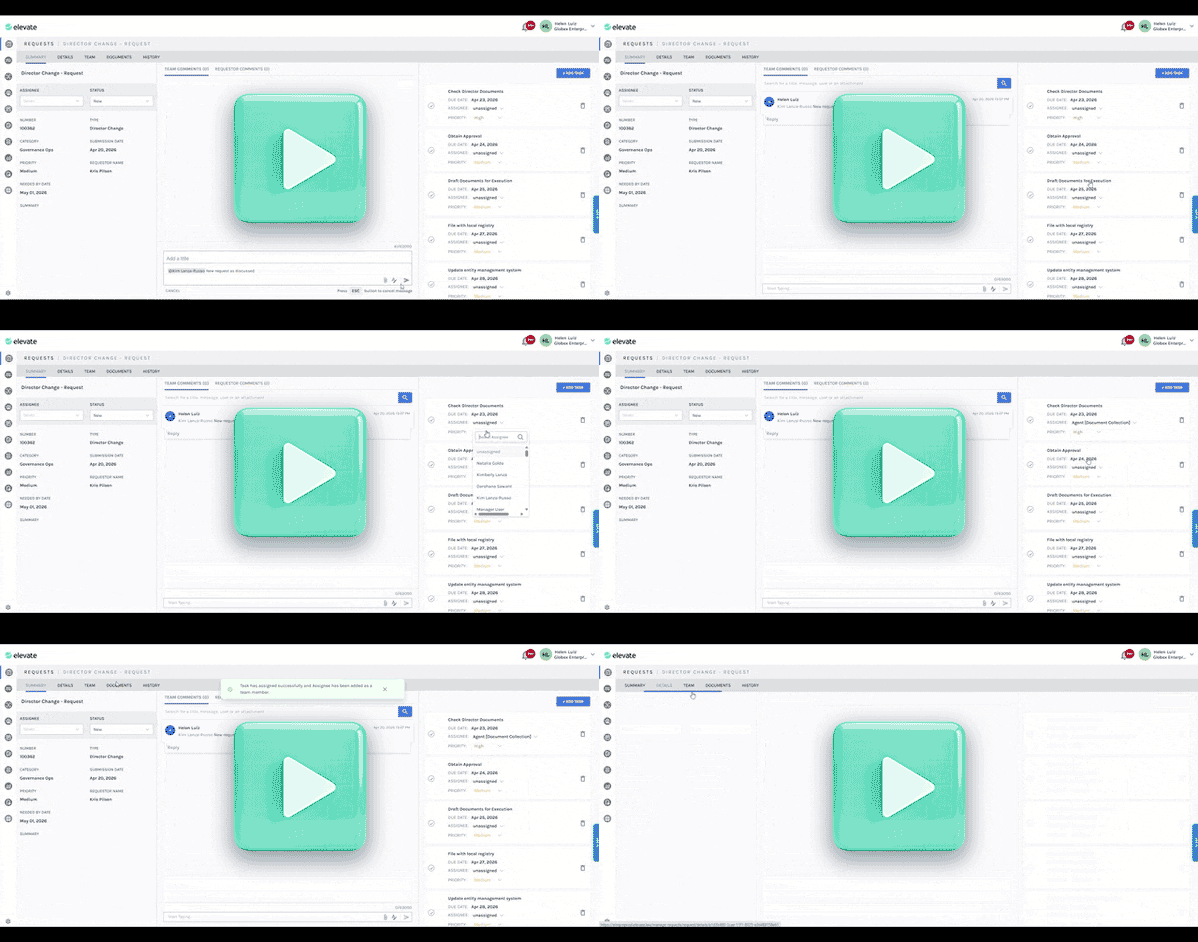
In more structured workflows like entity management, intake feeds directly into task execution. Requests are broken into steps, assigned to individuals or ELMA agents, and tracked through to completion, all within a single environment, reducing reliance on email chains and manual tracking.
Running Compliance Processes Without the Friction
Compliance workflows often depend on coordination rather than legal judgement; following up with stakeholders, collecting documents, and tracking deadlines.
In one client scenario, analysis showed that roughly 70% of the process could be automated.
ELMA agents can now manage much of that workload. They send requests for missing information, monitor progress, send reminders, and keep stakeholders updated. Structured data is captured throughout, strengthening reporting capabilities and making audit trails easier to maintain. The legal team remains involved where decisions are needed, but the administrative layer is significantly reduced.
Making Contract Remediation Manageable at Scale
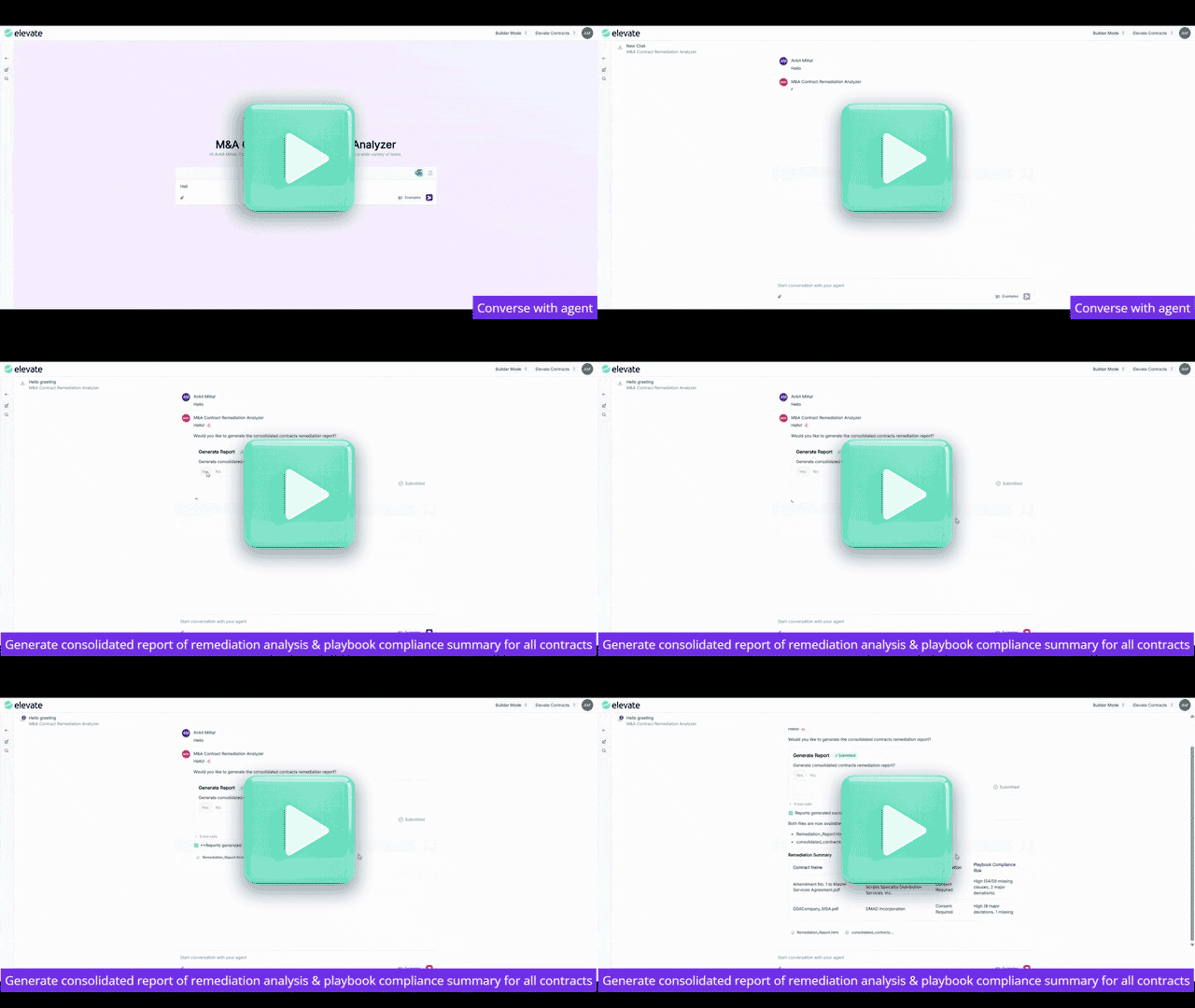
Large contract remediation exercises, particularly after mergers or acquisitions, are difficult to execute consistently due to the number of documents involved.
This workflow can now be heavily automated using ELMA. Contracts are reviewed against predefined playbooks, deviations are identified, and risk is assessed across an entire portfolio. The output is structured and prioritised, allowing teams to focus on the agreements that require the most attention first.
ELMA can also help by preparing communication to counterparties and suggesting negotiation approaches with vendors and customers, based on the individual contractual positions. The result is less time spent reviewing and organising contracts, greater consistency in execution, and reduced risk to the business.
Identifying Revenue Opportunities in IP
In intellectual property, one of the more complex and time-intensive tasks is mapping patents to technical standards. This process has traditionally been manual and difficult to scale. ELMA now performs the initial analysis, reviewing patents against standards, breaking down claims, and mapping them to relevant sections.
The output includes an assessment of mapping strength and supporting evidence, enabling teams to prioritise where deeper analysis is worthwhile. For organisations managing large patent portfolios, this improves the chances of identifying licensing opportunities. Where companies receive infringement claims, it also dramatically speeds up the assessment process, meaning quicker decision on whether resources need to be dedicated to defending those claims.
Answering Billing Questions Using Agents
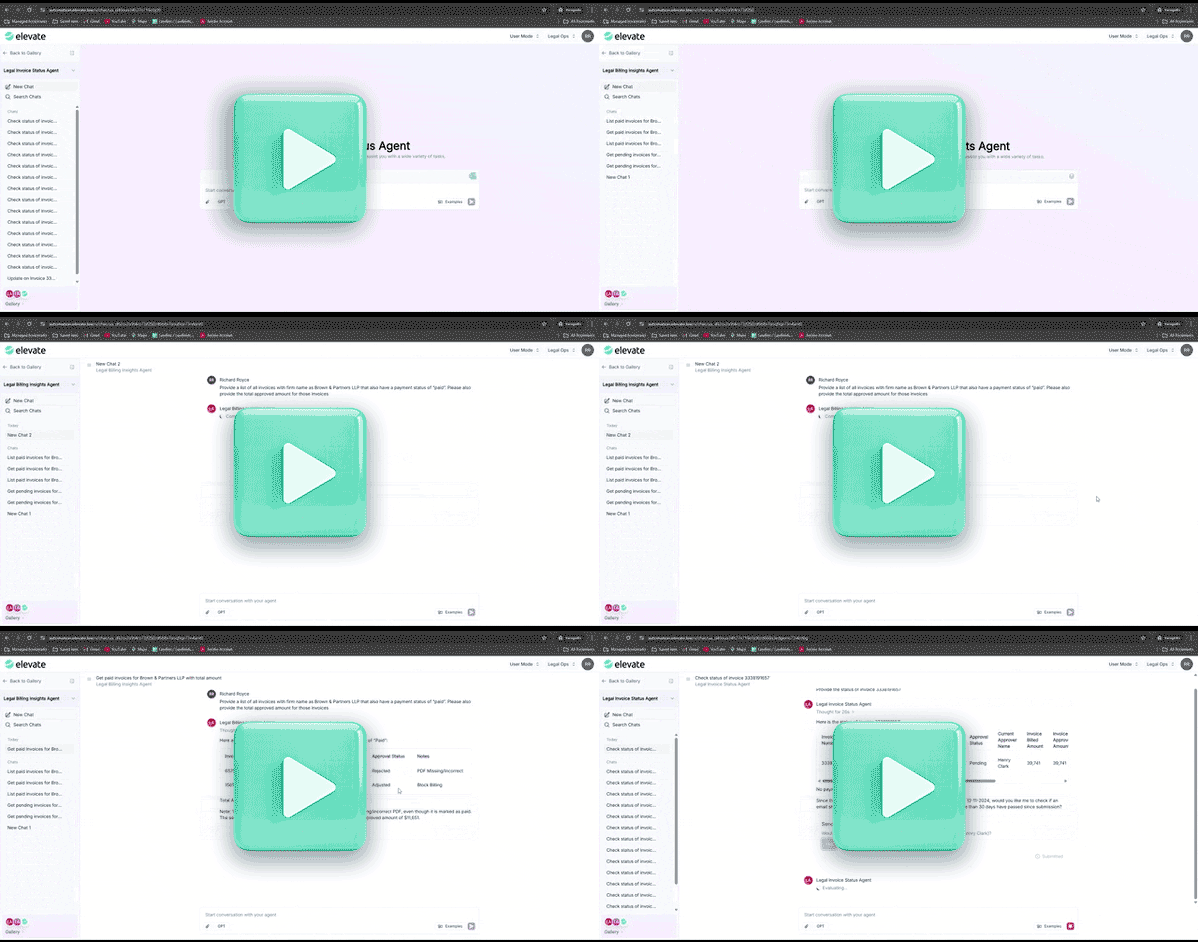
Invoice status queries are a consistent source of interruption for legal teams.
Using ELMA agents, users can retrieve invoice statuses directly, including where it sits in the approval process and with whom. The system can also trigger reminders to approvers, notify vendors of updates and provide aggregated insights across paid and unpaid invoices. This reduces the need for manual follow-ups and gives both internal teams and law firms easier access and increased visibility over live billing information.
The Common Factor
Across intake, contracts, compliance, IP, billing, the underlying pattern is consistent.
- Work is picked up earlier in the process
- Manual steps are removed or reduced
- Data is handled in a structured way
- Actions are triggered automatically
The result is faster execution, alongside more consistent, and often more accurate outcomes.
Heading Into CLOC Global Institute
As legal teams continue to look for clearer evidence of where AI and automation are making a tangible difference, interest is shifting towards real, operational use cases such as the ones outlined above.
Importantly, these ELMA solutions are not prototypes, they’re being used day-to-day to handle workloads across different parts of the legal function. In most cases, the value is coming from reducing the time spent on the surrounding work that typically slows everything else down.
We’re also actively looking for new opportunities to apply this approach. We understand every legal team has its own friction points, so if there’s a process that feels slower, more manual, or more resource-heavy than it should be, we’d be interested to hear about it.
Learn more about our Agentic AI Automation (ELMA)