
Volatility is not the problem. Governance is.
May 06, 2026
Consulting best practices law department
General counsel are no longer just lawyers in the room. They are leaders. It’s time they started acting like it.
Here’s the uncomfortable truth most organisations are not ready to hear: today’s struggles are not because the world has become volatile. They exist because decisions are still being made within an outdated governance framework that was never built for ambiguity, so it is always fragile. Volatility just exposed it and made it impossible to ignore.
Across boardrooms and C-suites, the prevailing mood is one of permanent alertness. Executives describe steering through permanent storms. Directors pore over red, amber, and green dashboards designed to reassure rather than to reveal. Risk functions, stuffed with frameworks built for a different era, are being asked to navigate a landscape they were not designed for, then blamed when the map does not match the terrain.
The answer is not another framework, another heatmap, another layer of process or better risk tools. The answer is a fundamentally different relationship with risk itself.
‘The most dangerous risk is the one nobody owns.’
Major operational failures rarely happen because people were careless or controls were weak. They happen because risk was sitting in the wrong place. The team closest to the problem had no authority. The team with authority had no information. And the team with information did not believe the risk was theirs to own.
That ownership gap, the silent no-man’s-land between authority, information, and accountability, is more dangerous than any single unmanaged risk. Misallocated risk shows up in post-mortems, not on dashboards.
The most important question every leadership team must answer is brutally simple: who actually owns this risk and who merely thinks they do? There is almost always a gap between those two answers. That gap is where failures are born.
‘Responsibility without power is just theatre.’
Governance fails in predictable ways. Most often, it creates responsibility without authority. Senior leaders are handed accountability for outcomes they cannot influence, while real decision rights sit elsewhere, pending approval, stuck in escalation, lost in process, or simply unassigned.
The organisations that move fastest through uncertainty, and the high-growth fintechs and scale-ups are the clearest proof, are the ones that treat empowerment as a structural feature rather than as sentiment. They align authority with responsibility. They eliminate unnecessary escalation. They embed decision rights directly into roles, not into processes that sit above them or committees.
If something went catastrophically wrong in your organisation tomorrow, who would move first? If you cannot answer immediately, you do not have a risk problem. You have a governance problem and no amount of risk framework will fix it.
‘Hesitation is the enemy of resilience and vague accountability is what creates hesitation.’
People often freeze because they lack clarity about whether the decision is theirs to make, whether they will be supported if it goes wrong, or whether the consequences will be proportional. Accountability, when it is real, is the antidote to all three. It defines ownership, what people are responsible for, what good looks like, and what happens when things go right and when they don’t.
‘Accountability is clarity, not blame.’
That clarity builds confidence. Confidence builds resilience. And resilience, not risk avoidance, is what protects organisations in volatile conditions.
When an organisation faces a hard call, the general counsel is the one person in the room with a panoramic view who can see the whole picture: regulatory horizon, operational reality, board appetite, reputational exposure, legal constraint. Such a panoramic view is a rare capability and it is being chronically underused when general counsel confine themselves to identifying risks and drafting mitigation plans. That vantage point is strategic, not advisory.
The role now is to translate ambiguity into choices. Not ten theoretical options that let everyone off the hook but two or three that force a decision. External advisers who sit on fences should be challenged. The board needs positions it can act on instead of positions it can file.
Every CEO wants growth. Every regulator wants stability. Every board wants both, simultaneously. The general counsel sits at exactly that intersection and that is the definition of their role. General counsel are leaders who shape frameworks, influence culture, and enable growth with clarity and confidence. Risk leadership is the evolution of legal leadership that positions general counsel for strategic roles, evolving from guardians to strategic enablers.
Volatility is not the problem. Outdated governance is. Volatility isn’t going away, but neither are the opportunities. The organisations that will thrive are those that fix allocation, restore authority, and make accountability real and those are precisely the conversations general counsel are uniquely placed to lead. Don’t just manage risk. Lead it.
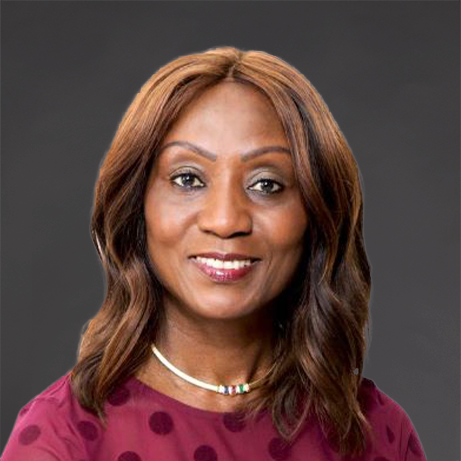
Disclaimer: This post features insights from a guest author. Elevate occasionally invites select industry voices to share their perspectives on topics of interest to our audience. The views and opinions expressed are those of the author and do not necessarily reflect those of Elevate.
Learn more about our Legal Talent Services